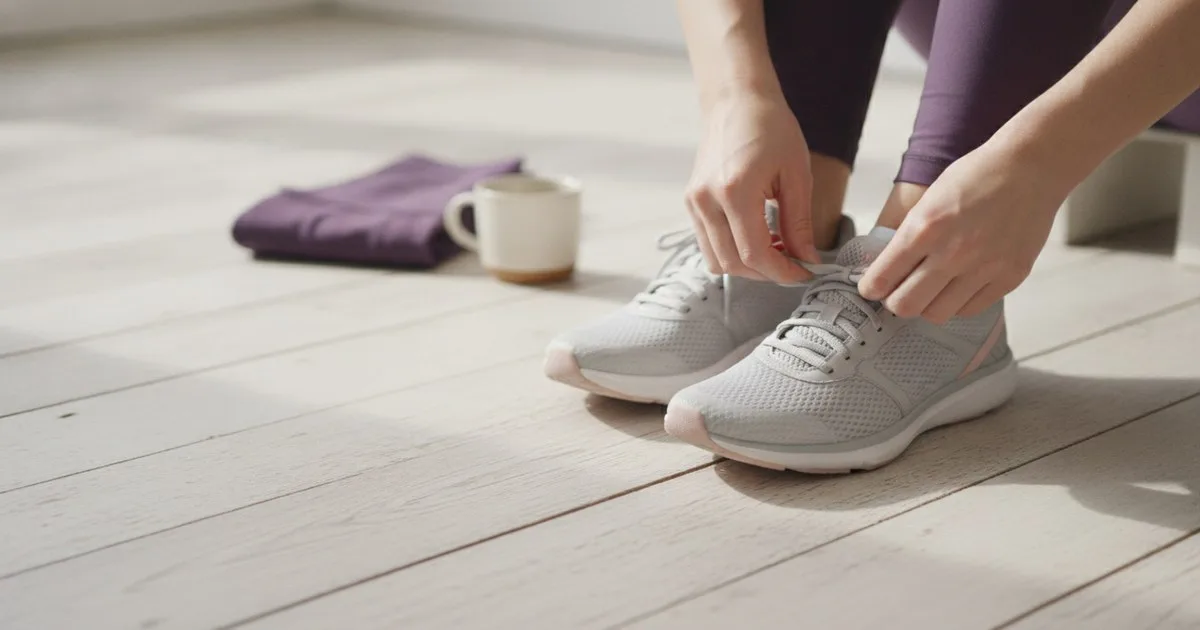
Smart sportswear is no longer a prototype on a runway. Sensors that track your heart rate, movement patterns and recovery signals are now sewn into leggings, laced into trainers and printed onto training tops you can buy today. The promise is compelling: clothing that coaches you, adapts to your body and helps you train smarter. But the gap between that promise and what the technology can reliably deliver is worth understanding before you spend your money, or your data.
Key takeaways
- Consumer wearables measure steps and heart rate with reasonable accuracy in controlled conditions, but energy expenditure readings remain consistently unreliable across brands.
- The data your smart sportswear collects is health data, and regulators in several markets are tightening the rules around how companies must handle and disclose breaches.
- Major sportswear brands are moving toward performance science embedded in garments, not just clipped-on devices, blurring the line between fashion and medical-grade monitoring.
- Accuracy varies significantly by metric and by individual physiology, so the same garment can perform differently on different bodies.
- Knowing what a sensor actually measures, versus what the app tells you it means, is the most useful thing a consumer can learn before buying.
What does 'smart sportswear' actually mean?
The phrase covers a wide range of products. At one end, you have a running top with reflective panels and a phone pocket. At the other, you have a garment with conductive yarns woven into the fabric that detect electrical signals from your muscles, transmit them wirelessly to an app and generate a fatigue score in real time. Most products sold today sit somewhere between those two poles.
The sensors most commonly embedded in athletic clothing and footwear include:
- Optical heart rate sensors, which shine light through the skin and measure how blood absorbs it.
- Accelerometers and gyroscopes, which track movement, stride length and cadence.
- Electromyography (EMG) sensors, which detect muscle electrical activity and are more common in research garments than mass-market products.
- Temperature and galvanic skin response sensors, which are used as proxies for exertion and stress.
The distinction between a garment with embedded sensors and a wearable device you strap on is becoming less clear. Nike has moved into performance science through its Aero-FIT cooling apparel and neuroscience-informed footwear under its Mind platform, treating the shoe and garment itself as the data-collection surface rather than an accessory. adidas has a long history of embedding performance technology into its products, from smart insoles to connected training gear. On markets products such as its FormTec Train Tights to athletes who want compression and performance feedback built into the garment rather than layered on top of it.
How accurate is the data your clothing collects?
This is the question the marketing does not answer clearly, and the research does.
A large systematic review examining commercially available wearable devices found that step counting was reasonably accurate for leading devices in laboratory conditions, but that energy expenditure was inaccurate across every brand tested. Heart rate measurement was more variable, with accuracy depending heavily on the device and the conditions of use.
More recent research focused specifically on one of the most studied wearables found that accuracy varied significantly by metric: atrial fibrillation detection showed high specificity but lower sensitivity, blood oxygen saturation showed low mean bias but wide limits of agreement, and energy expenditure error was inconsistent and frequently large. The researchers noted that individual physiology affects results in ways that aggregate accuracy figures do not capture.
What this means in practice: if your smart leggings tell you that you burned a specific number of calories during a session, treat that figure as a rough guide, not a measurement. If they tell you your heart rate peaked at a certain point, that is more likely to be close to accurate, though still not clinical-grade. Step counts in straightforward walking or running conditions are the most reliable metric the technology currently offers.
The gap between what sensors measure and what apps present as insight is also worth noting. A sensor measures a physical signal. The app applies an algorithm to translate that signal into a number you recognise. Those algorithms are proprietary, vary between brands, and are rarely published for independent scrutiny.
Why are sportswear brands investing in this now?
Several forces are converging. Consumer appetite for personalisation has grown steadily, and data-driven personalisation requires data. The miniaturisation of sensors and the falling cost of Bluetooth and near-field communication components have made embedding them in fabric commercially viable. And the broader shift toward health-consciousness, accelerated by the pandemic years, has made performance metrics a selling point even for people who are not competitive athletes.
McKinsey's State of Fashion reporting notes that smart eyewear blending fashion and technology is poised for a breakout year, with several product launches signalling that the accessories category is moving toward embedded technology. The same logic applies to sportswear: the category that has always been closest to the body is the natural first home for sensors.
There is also a sustainability argument, though it is still developing. Garments that give you accurate recovery data could, in principle, help you train more efficiently and buy less. Made-to-order and data-informed sizing could reduce the return rates that drive enormous textile waste. Whether the brands currently selling smart sportswear are genuinely pursuing these outcomes or using sustainability language to support a premium price point is a question worth asking of each product individually.
What happens to the data your clothes collect?
This is where the conversation shifts from performance to privacy, and it is the part most marketing materials skip.
When your smart sports bra or connected running shoe transmits data to an app, that data is health data. It describes your body, your movement, your sleep, your stress responses. In the United States, the Federal Trade Commission has clarified and strengthened its Health Breach Notification Rule, finalising changes that extend its reach to health apps and similar technologies and expanding what companies must disclose to consumers when health data is breached. That is a meaningful development: it signals that regulators view the data collected by consumer wellness technology as health data deserving of protection, not simply fitness statistics.
In practice, this means you should read the privacy policy of any smart sportswear app before you use it. Specifically, look for:
- What data is collected, and whether it includes data you did not expect (location, sleep patterns, menstrual cycle tracking).
- Who the data is shared with, including third-party analytics providers and advertisers.
- How long the data is retained, and whether you can request deletion.
- What happens to your data if the company is acquired, which is not a hypothetical concern in a market where startups are frequently bought by larger platforms.
None of this means you should avoid smart sportswear. It means you should treat the data question with the same seriousness you would bring to any health app.
The design question: does it actually look good?
For a long time, 'smart' and 'stylish' pulled in opposite directions. Sensor pods, visible wiring and battery packs made garments look clinical or clunky. The current generation of embedded technology is genuinely less visible. Conductive yarns can be woven into fabric without changing its drape or texture significantly. Sensors are smaller and more flexible. Charging is increasingly handled through the wash cycle or through kinetic energy rather than a port.
The brands doing this most convincingly are the ones treating the technology as a constraint to design around rather than a feature to show off. A compression tight that happens to track muscle activation looks like a compression tight. A running shoe that analyses your gait looks like a running shoe. The technology becomes invisible, which is arguably the point.
The tension that remains is between washability and durability. Electronic components embedded in fabric have to survive repeated washing, stretching and sweat exposure. The industry has made significant progress here, but it is still worth checking the care instructions of any smart garment carefully, and checking whether the sensors are removable before washing.
What is still unsolved?
Several things.
Standardisation does not exist. There is no agreed framework for how accuracy should be reported for smart garments, which means brands can make performance claims that are technically true in narrow conditions without disclosing the conditions. Independent testing is limited, and what exists tends to focus on wrist-worn devices rather than embedded textile sensors.
Longevity is an open question. A conventional sports garment might last years with proper care. A smart garment has electronic components with a finite lifespan, and when those components fail, the garment may become unwearable or simply become a conventional garment that cost significantly more than it needed to. The right-to-repair question, already live in consumer electronics, has not yet arrived meaningfully in smart textiles.
The data ecosystem is fragmented. Your smart leggings from one brand may not talk to your running app from another, or to your recovery tool from a third. The result is that the holistic picture of your performance that the marketing promises often requires you to use a single brand's entire ecosystem, which limits your choices and concentrates your data in one place.
And the accuracy gap for the metrics that matter most, particularly energy expenditure and recovery readiness, has not closed. The technology is improving, but the honest answer is that the most useful metrics are still the least reliable.
How to buy smart sportswear without being misled
If you are considering a smart sportswear purchase, a few practical questions will help you cut through the marketing:
- What specifically does it measure? Ask for the sensor type, not just the output metric. 'Tracks your energy' is not a sensor specification.
- Has the accuracy been independently tested? Brand-funded studies and independent peer-reviewed research are different things.
- What app does it require, and what does that app do with your data? Read the privacy policy before you buy, not after.
- Can the sensors be removed for washing? If not, what is the care protocol, and what is the warranty on the electronics?
- What happens to the garment when the technology is discontinued? Some brands have sunset connected products, leaving customers with garments that no longer function as advertised.
Smart sportswear at its best offers something genuinely useful: data about your body that helps you train more effectively, recover better and understand your physical patterns over time. At its worst, it offers the aesthetics of data without the substance, at a premium price, with your health information as the hidden cost. The difference between those two things is usually visible in the details, if you know where to look.
FAQ
Is smart sportswear accurate enough to use for training decisions? For step counting and general heart rate monitoring during steady-state exercise, current wearable technology is reasonably reliable. For energy expenditure and recovery metrics, accuracy is inconsistent across brands and individuals. Use the data as a guide and a trend indicator, not as a precise measurement.
Who owns the health data my smart sportswear collects? This depends on the brand and jurisdiction, but in most cases the company that operates the app holds your data. Regulators in several markets, including the US, have extended health data breach notification rules to cover health apps and connected devices. Read the privacy policy of any app before you connect a garment to it.
Can I wash smart sportswear the same way I wash regular activewear? Not always. Some garments require you to remove sensor pods before washing; others are fully integrated and have specific temperature and cycle restrictions. Check the care label and the brand's guidance carefully. Failure to follow care instructions can void the warranty on the electronic components.
Are the performance claims on smart sportswear regulated? In most markets, no. Unlike medical devices, consumer fitness wearables and smart garments are not subject to clinical accuracy standards. Brands can make performance claims based on their own testing without independent verification. This is beginning to change as regulators pay more attention to health data, but accuracy claims on garments remain largely unregulated.
Will smart sportswear data work across different apps and platforms? Often not seamlessly. Many brands build closed ecosystems where their garments work best, or only, with their own apps. Before buying, check whether the garment exports data in a standard format and whether it integrates with the tools you already use.
Is smart sportswear more sustainable than conventional activewear? The answer depends on the product and the brand. Garments with embedded electronics are harder to recycle than conventional textiles. However, data-informed training and sizing could in principle reduce overconsumption and returns. Look for brands that have published end-of-life programmes for their electronic components, and treat sustainability claims without specifics sceptically.
Further reading
- Reliability and validity of commercially available wearable devices: systematic review
- The accuracy of Apple Watch measurements: a living systematic review
- FTC finalises changes to the Health Breach Notification Rule
- State of Fashion: McKinsey